fbpx
Category

News

Designing Profitable Game Rooms for Entertainment Centers in 2026

By | No Comments

January 2026

Visibility Drives Engagement in Entertainment Center Game Rooms

Designing a Game Room within an Entertainment Center is a multi-layered, highly collaborative effort—and it starts with rethinking a common misconception. While walls are necessary for certain skill wall games, fully enclosing a game room or tucking it down a hallway is one of the fastest ways to limit its performance.

Redemption and arcade games thrive on visibility. When guests see others actively playing, celebrating wins, and competing with friends, it creates instant energy. That energy sparks curiosity, draws people in, and drives participation. The game room shouldn’t be hidden—it should be a visual anchor that activates the entire entertainment center.

We witnessed this firsthand at IAAPA while playing Baytek’s new gas-pumping game, Perfect Pump. As we walked the show floor with a client evaluating new attractions, they encouraged us to try it. The goal is simple: hit a specific dollar amount—something we’ve all experienced when running in for a quick $10 fill-up. The arcade version delivers the same pressure and humor (minus the gas smell).

As we played, laughed at our near misses, and groaned when we went over, we noticed people slowing down, stopping, and watching us from across the floor. What began as casual play quickly turned competitive. Challenges emerged. Scores were compared. That’s competitive socializing in action. If a single game can create that level of buzz on a trade show floor, imagine the impact when it’s intentionally placed within your entertainment center.

Flexible Game Room Design and Planning for Power

Flexibility is critical to a successful game room. Games rotate, footprints change, and technology evolves quickly. Refreshing the game mix keeps the experience new and gives guests a reason to return.

Planning for power early in the design process is equally essential. Will power come from above or below? Can the infrastructure support future changes? These decisions, made early, can save significant cost and disruption later.

Game sizes, heights, and technical requirements vary widely, and they continue to evolve. At IAAPA, we saw several games incorporating escape-room-style puzzle solving—without requiring a dedicated, fixed escape room footprint. Designing adaptable layouts allows you to take advantage of these innovations as they emerge.

Active and Movement-Based Arcade Game Trends

One of the biggest advantages of out-of-home entertainment is activity—and this trend was unmistakable at IAAPA. Many new games emphasized motion and physical engagement well beyond traditional joystick-and-button play.

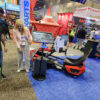
One standout required players to roll a large “boulder” around and over obstacles, engaging the entire body. Melissa tested the modest-sized version, while a larger option pushed the experience even further. Archery games also made a strong return this year, including Lasertron’s Krazy Arrows, which blends traditional archery with gamified scenarios.

We also saw AR and VR experiences that require players to physically move through space, along with modern takes on classics—Dance Dance Revolution-style games for hands and skee-ball reimagined as putting golf. The trend is clear: guests want games that get them moving, competing, and laughing together.

Game Distribution, Redemption Spaces, and Long-Term Profitability

A successful game room doesn’t stop at game selection. The redemption area—worthy of its own dedicated discussion—and collaboration with an experienced game distributor are critical to long-term profitability.

The right distributor helps fine-tune the game mix to match demographics, encourage repeat visits, and maximize revenue per square foot. They also assist with buy-versus-lease strategies and often provide early layouts that evolve as operations grow.

Activating Game Spaces in 2026 Entertainment Centers

As we move into 2026, we invite you to think strategically about how your game space is activated—not hidden away, but integrated as a core driver of energy, engagement, and revenue within your entertainment center.

Check back for more blogs, past and future, from TK Architects that discuss other aspects of Entertainment Center design!

Principal, Theresa English

America First Square continues to grow, adding Megaplex entertainment center

By | No Comments

July 2025

The new Larry H. Miller Megaplex at America First Square in South Jordan redefines the modern cinema experience. More than just a movie theater, this first-of-its-kind entertainment center offers eight premium screens with Dolby Atmos sound, heated luxury recliners, and in-seat dining — plus an 18-lane bowling alley, a 65-game arcade, and a full-service dining experience for guests to enjoy before or after the show.

Located in the heart of a growing entertainment district that includes a ballpark, a new amphitheater, and upcoming restaurants, the Megaplex is designed as a vibrant community hub. With convenient transit access, this venue reflects a broader vision to create spaces that offer not only entertainment but long-term economic benefits to the region. Additional Megaplex entertainment centers are already planned for St. George, signaling a continued evolution of this concept across Utah.

ARTICLE LINK:

America First Square continues to grow, adding Megaplex entertainment center | KSL.com

Don’t Dismiss the Box: How to Design It Right the First Time

By | No Comments

May 2025

by Principal Steve Petracek

Thinking outside the box… By Starting with One

The Basic ” box isn’t usually considered good architectural design. It’s commonly associated with warehouses, grocery stores, or home improvement centers — all built for pure function and efficiency. But maybe there’s more to it that that.

This blog is here to suggest that by rethinking how we approach the box, we can unlock new opportunities — especially when it comes to entertainment renovations and remodels. A few simple structural choices early on can go a long way toward making these spaces more adaptable down the road.

Planning for Possibility, Not Just Purpose

Instead of always letting function dictate the design, what if we allowed form to guide the function? A wide, open space — especially one without columns — gives you the most flexibility. Of course, most buildings still require columns, but they can be positioned intentionally to keep the space open, usable, and easy to adapt.

When the building’s lateral systems (the parts that resist wind or seismic movement) are handled with concrete, CMU, or steel frames placed around the perimeter, you reduce the number of interior obstacles. That means fewer headaches when the space eventually needs to change. We’ve seen plenty of projects where structural demising walls caused major issues — making renovations far more difficult and expensive than they need to be.

The Strength of the Box

Think of the box as a clean, open structure. Add columns only where necessary — just enough to carry the lid. The fewer, the better. These columns can define areas of the space (intentionally or not), so placing them with purpose is important. Once done right, that open plan becomes multifunctional. It can be repurposed, subdivided, or expanded with far less effort.

Elevating the Ordinary

A plain box might not sound attractive, but think or it like building blocks — they don’t all need to be the same size or shape. you can introduce depth and interest by stacking or staggering different volumes. When done thoughtfully , the very systems that hold the structures up —lateral frames, columns, etc. — can become architectural features instead of nuisances.

By placing those elements in key locations (along the exterior or in areas that are less likely to change), the design becomes more resilient. It’s a small move with big long-term benefits.

Design for What’s Next

The truth is, no one wants to design for change — but preparing for it is smart. The more flexibility you build in now, the easier (and more affordable) future upgrades will be.

So yes, let’s think outside the box — but maybe the smartest first step… is starting with one.

Principal Steve Petracek

Lessons Learned and the Way Forward in the Wake of the Pandemic

By | No Comments

September 2021 Michael Cummings, Sr. Principal

I was fortunate to participate in an International Cinema Technology Association panel discussion at CinemaCon.  ICTA President Frank Tees served as the moderator and ICTA Vice President (International) Jan Runge interviewed Thomas Van de Weerd, proprietor of the (Any)thing cinema with their first private cinema located in the Netherlands.  I was joined on the panel by creative, passionate, and driven exhibitors Tim League of Alamo Drafthouse, Bobbie Bagby of B&B Theatres, and (via video) Crispin Lilly of Medi-Cinema and former CEO of Everyman Cinema.

The exhibition perspective on lessons learned and the way forward was well represented, and I focused on the design perspective.  Four specific design lessons learned are touchless service, prioritizing cleanliness, importance of ventilation, and the increased role of technology.  Some aspects were going to occur eventually anyway, but the pandemic accelerated their implementation. 

Let us now turn to the fun design stuff

Touchless Lobby and Concessions

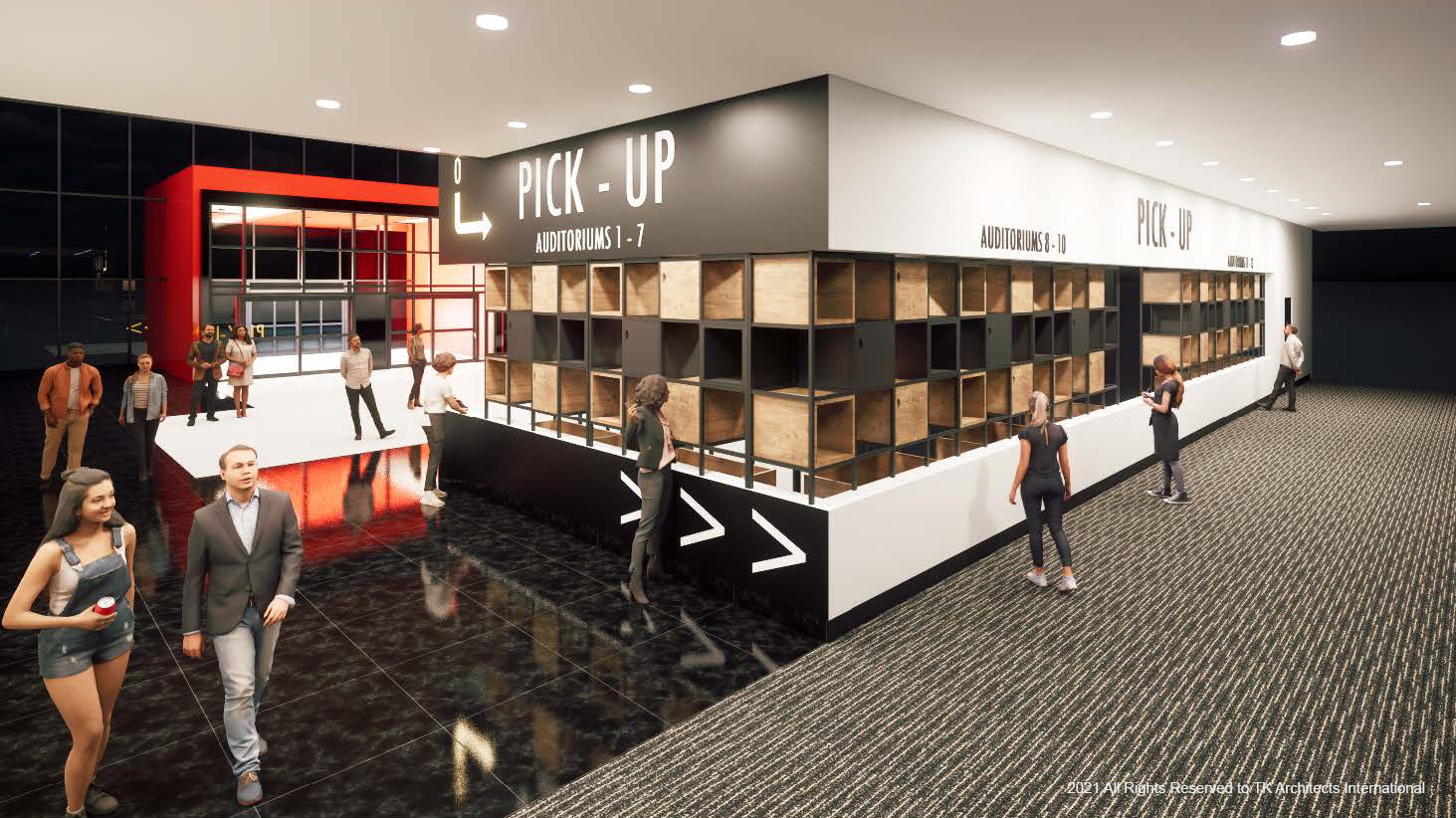
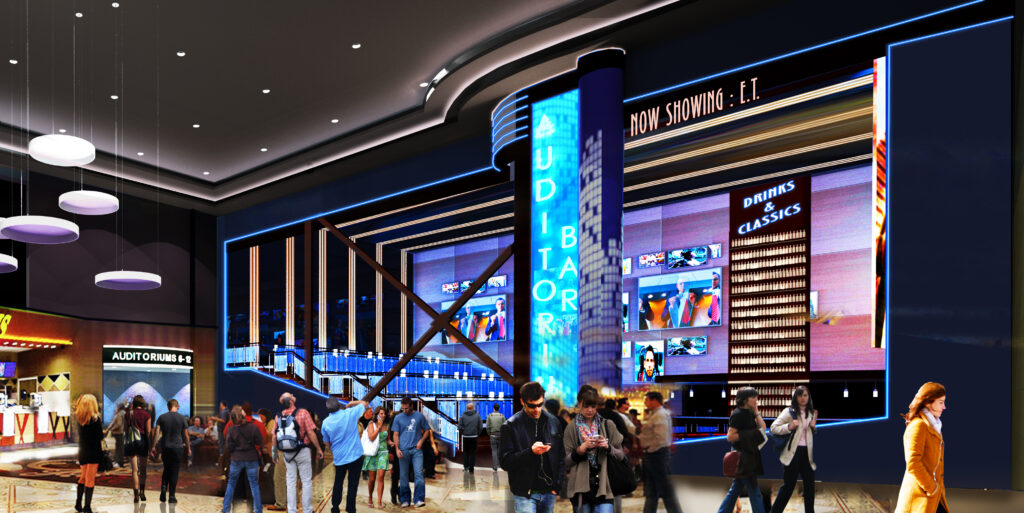
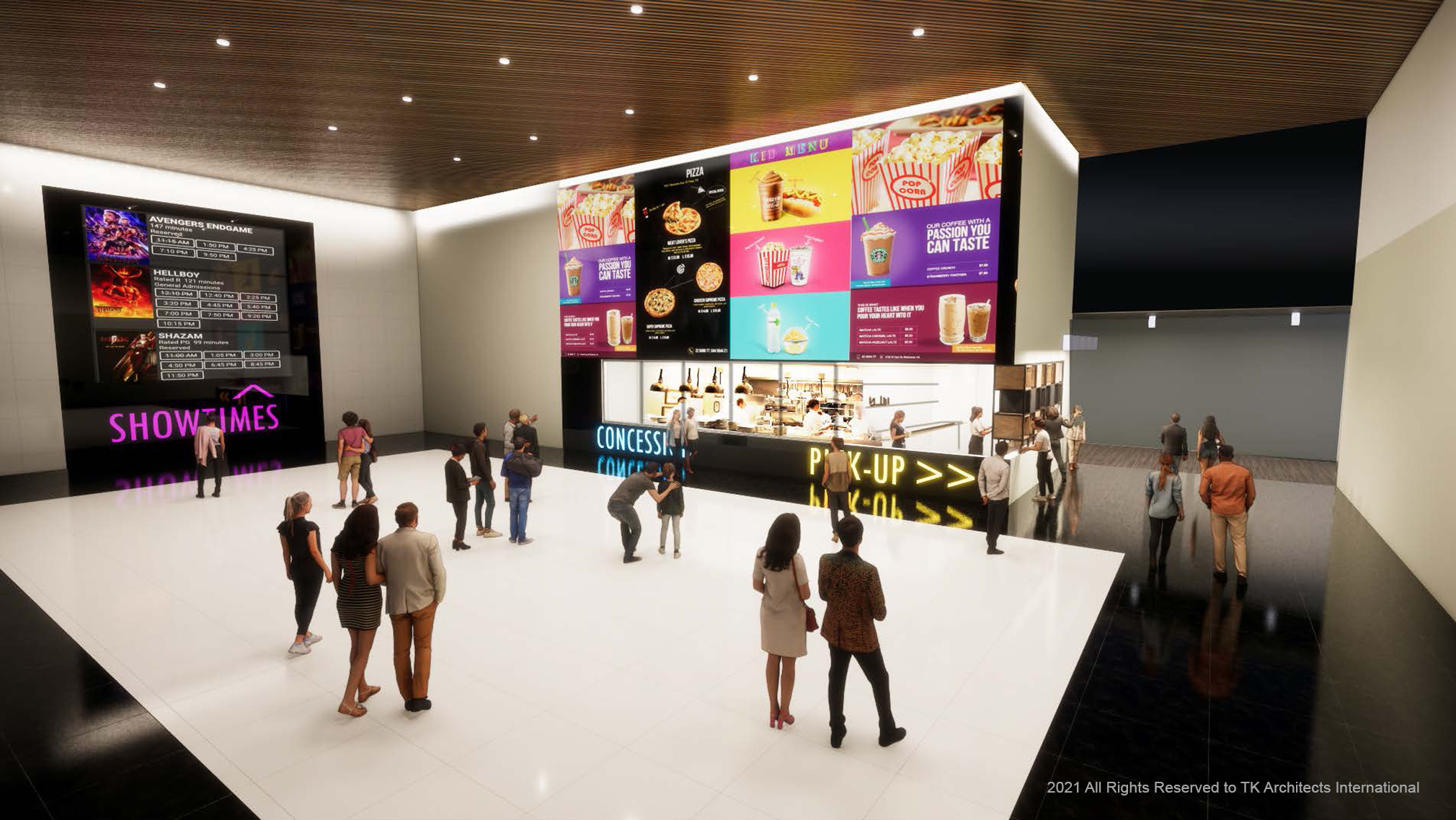
The transition to technologically enabled touchless service was occurring before the onset of Covid, but its adaptation was greatly accelerated.  The lobby and concessions envisioned below uses large graphics for visibility throughout the lobby, QR codes coupled with loyalty apps for ordering, and separated pickup conveniently around the corner.  The concession preparation area is enclosed with glass providing customer visibility into the kitchen while maintaining separation, cleanliness and avoiding direct contact between concessionaires and customers. 
What else have we learned from the pandemic? Without diving deeply into exhibition, the business partnership between studios and exhibitors has changed; by necessity during the “closure/lockdown” portion of the pandemic, and new rules on the relationship continue to evolve.  There is no doubt that this new relationship will result in a need for fewer auditoriums.  Movies will be in theatres for shorter periods and there will also likely be fewer exclusive theatrical release titles.  This should incentivize exhibitors to utilize auditoriums (and/or auditorium and lobby space) for other sources of revenue.     Among the diverse revenue-generating concepts are: 

E Sports & Gaming

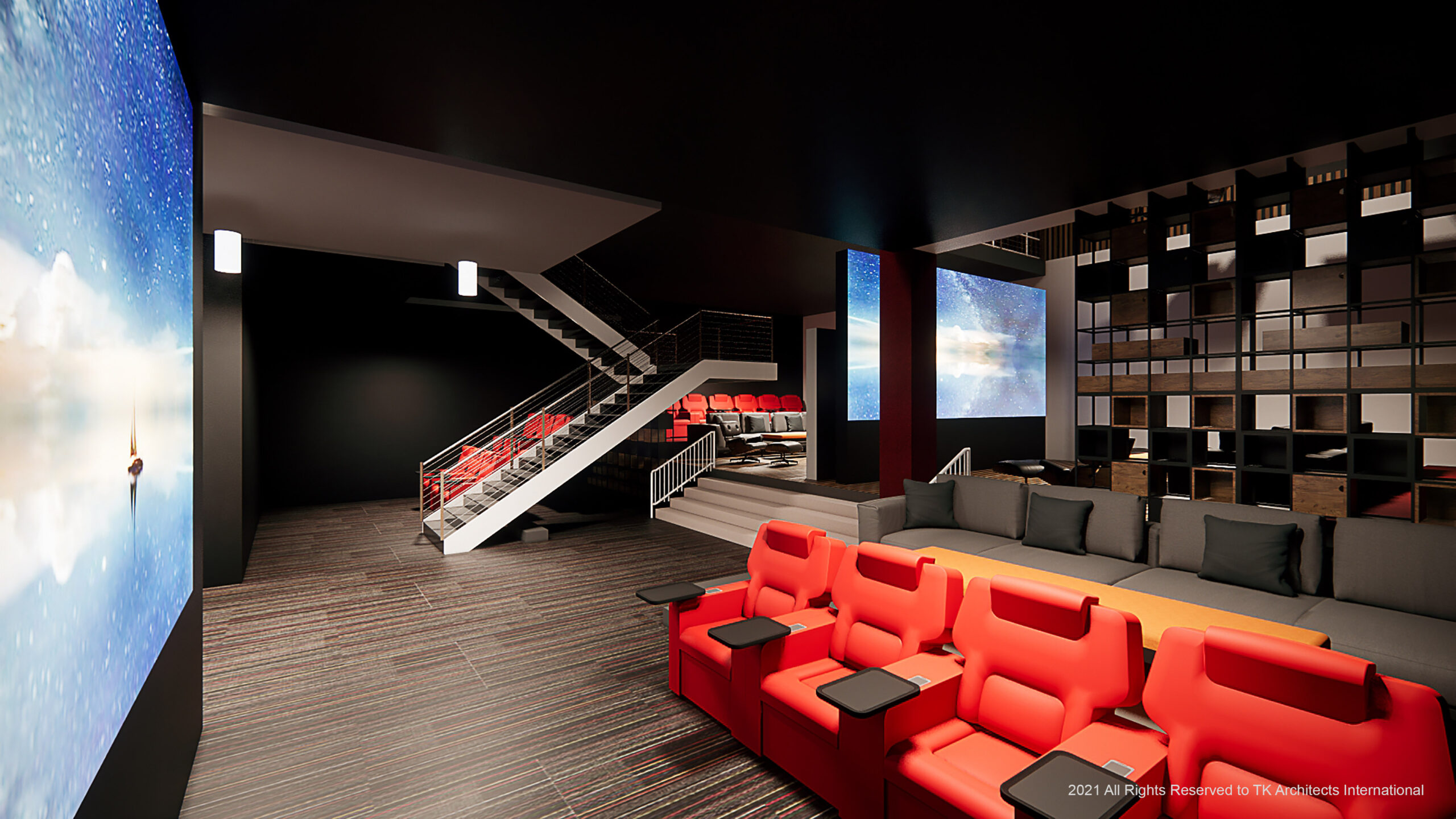
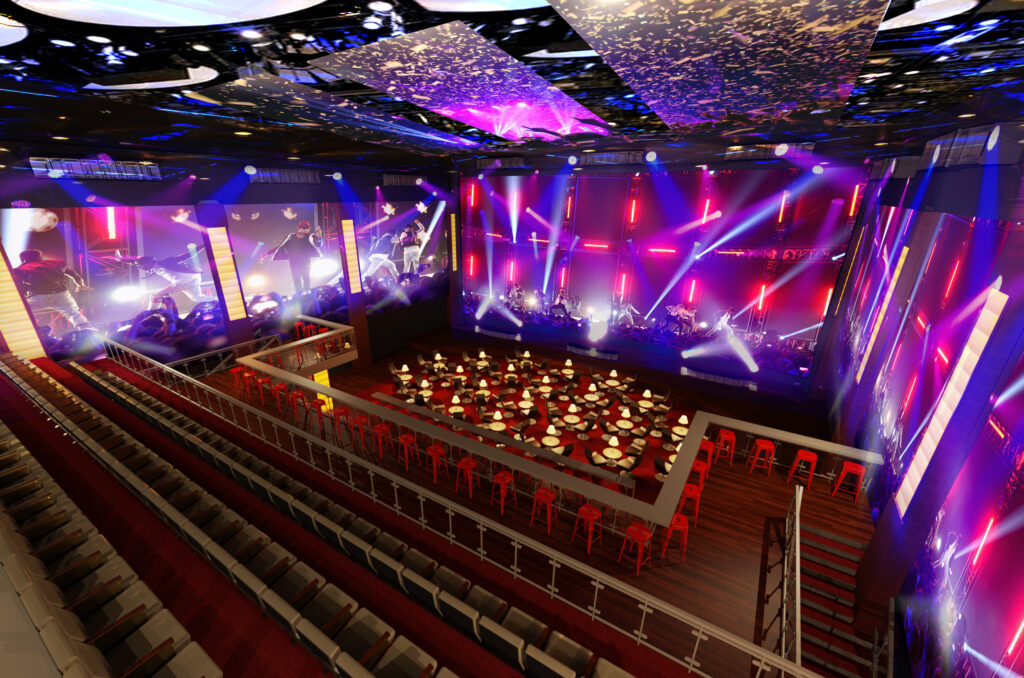
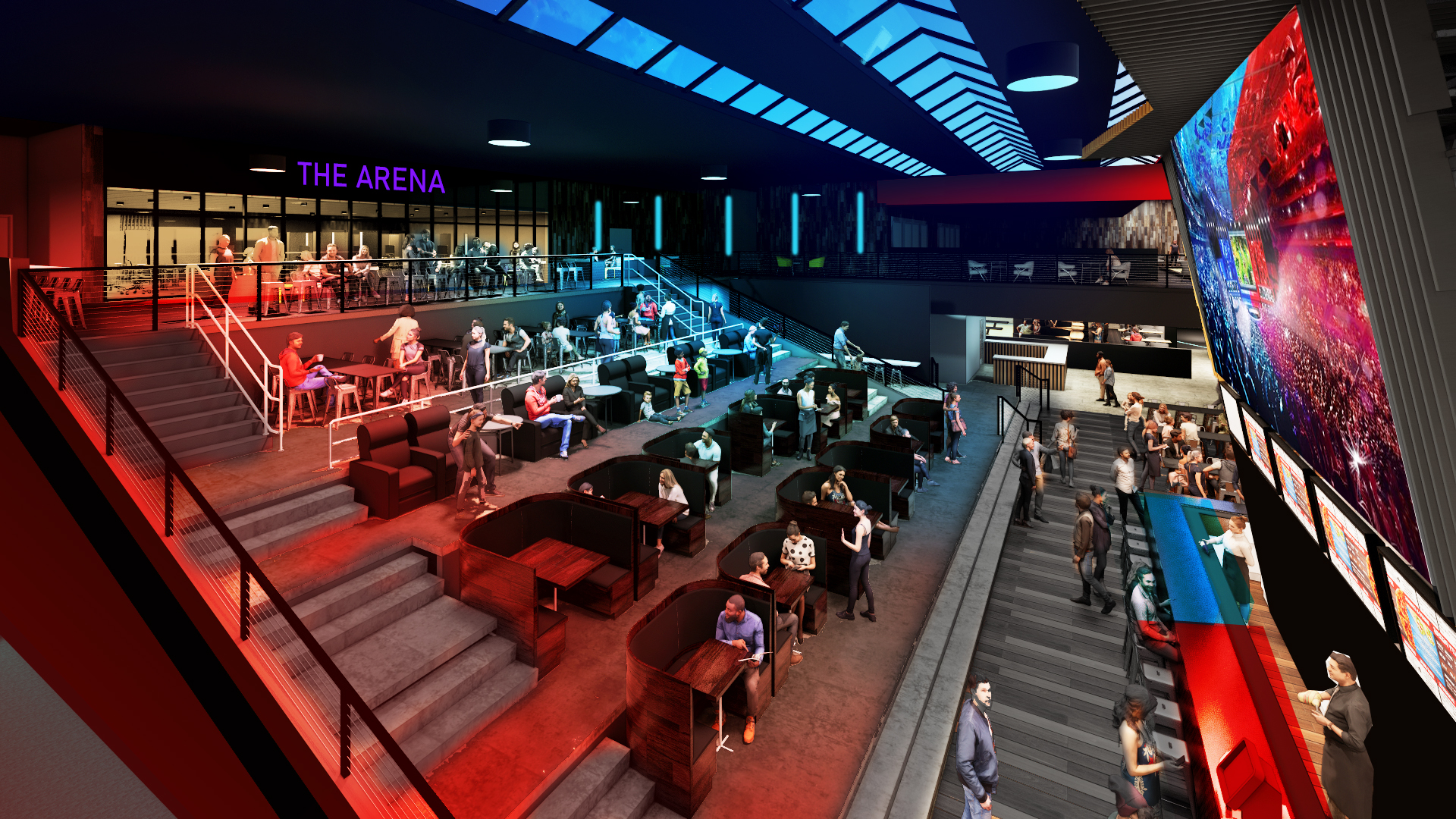
This is not an arcade but a competitive eSports and/or gaming space.  It can be a competitive coliseum (like the first image) or a more socially oriented space.  Either approach works well with auditorium-sized spaces, as well as for other uses and content.  These fast-growing markets will surely bring new customers to your facilities.
VR/AR/MR

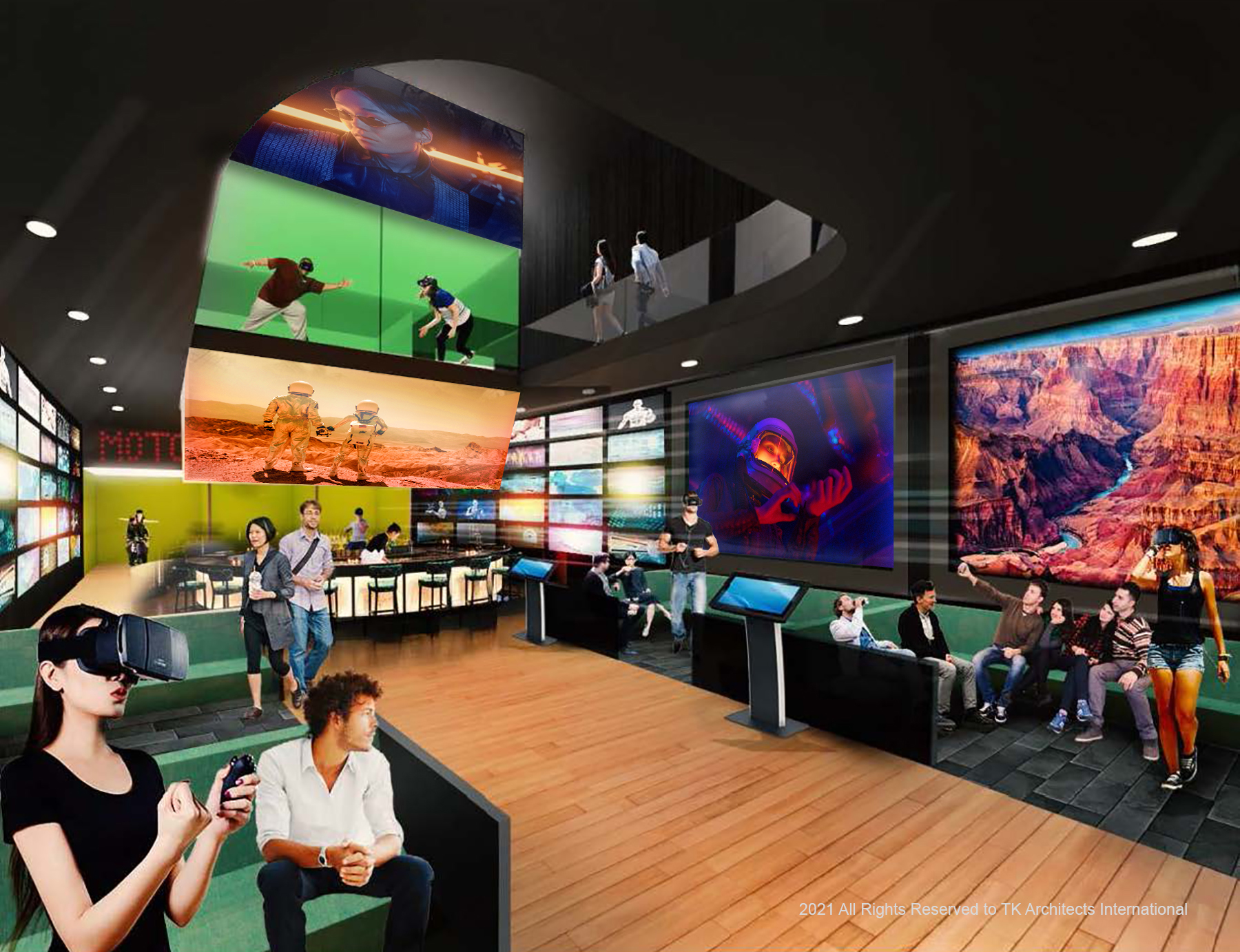
Virtual reality, augmented reality, and/or mixed reality are key components of entertainment.  These gaming focused applications of technology are also “spectator sports’ and should be coupled with a bar and extended food service.  VR/AR/MR have also shown to be an effective medium for storytelling under the direction of skilled filmmakers.  There are exciting developments underway. 
Private Cinema (Flexible use Auditoriums)

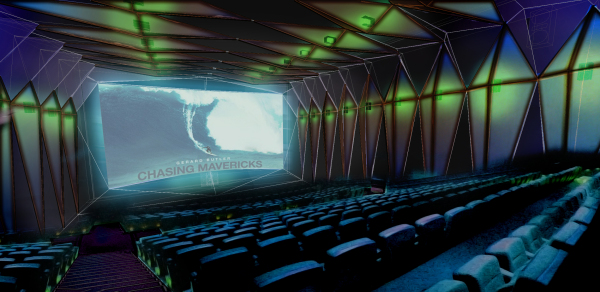
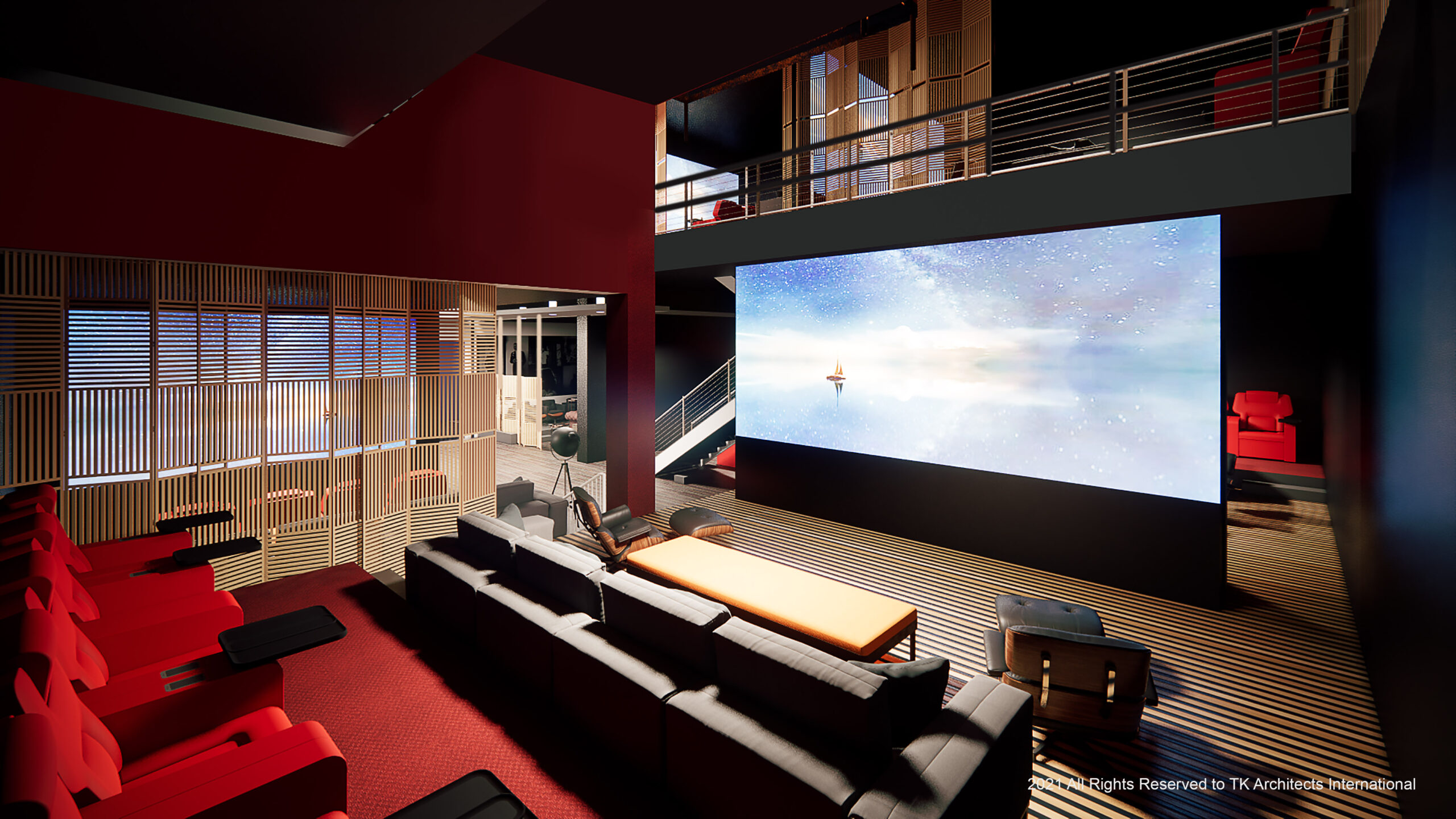
Private Cinema rental existed prior to the pandemic but provided a real lifeline to exhibition during it.  What if you designed small auditorium spaces for a variety of uses including traditional private cinema?  They are in essence a private entertainment space that can include first-run feature films, legacy films, subscription service entertainment, sports, music, esports, and other events, meeting space, karaoke, and virtual reality.  The key is designing them to provide multiple uses. 
Adult Lounge

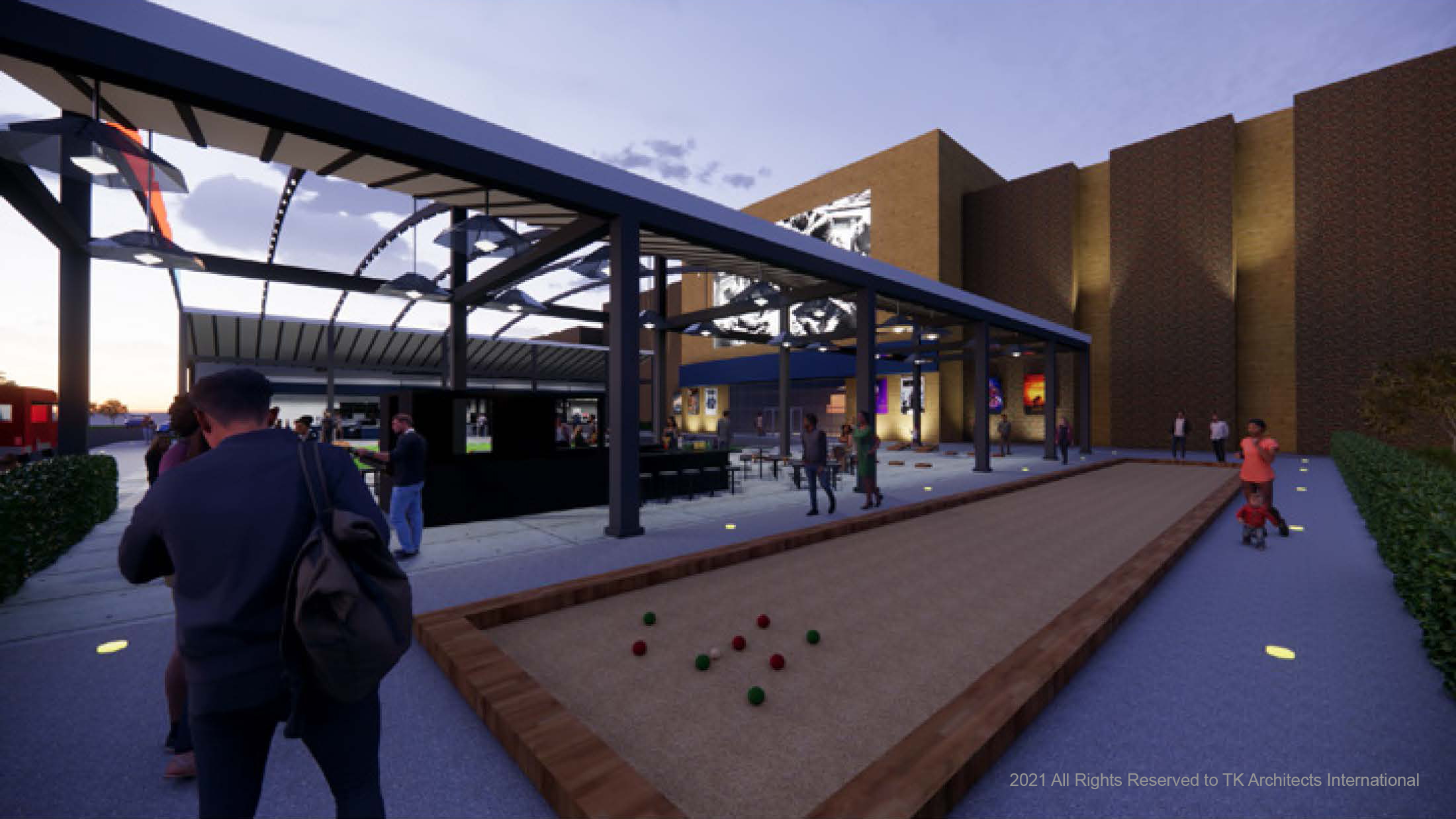
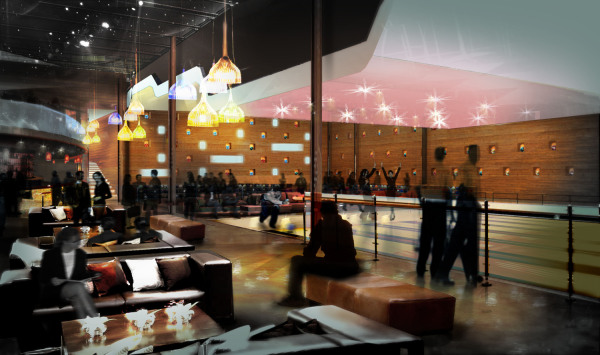
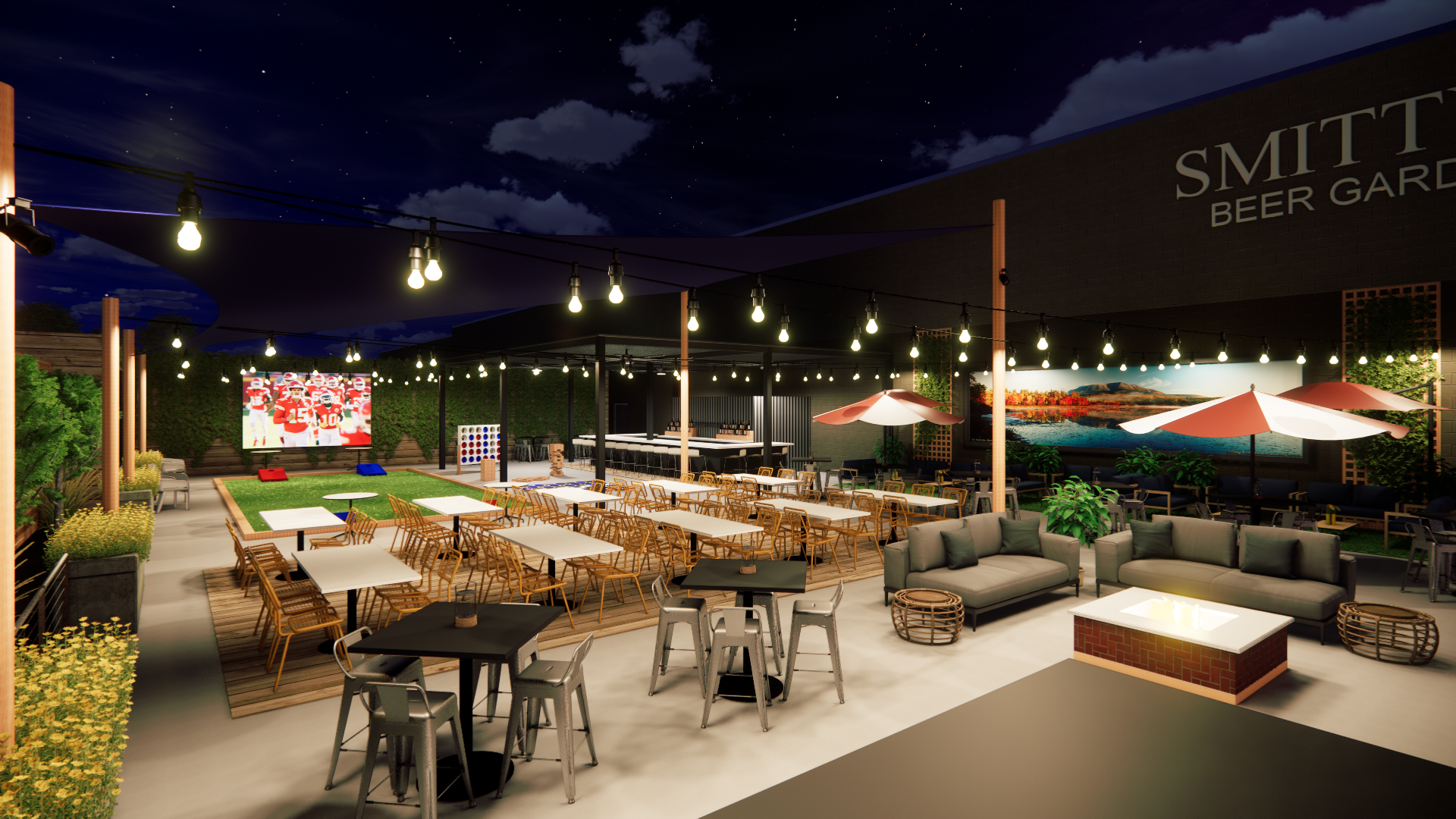
Many cinemas already include bars and expanded food services. What about providing adjacent entertainment options to keep customers there longer. Options include duckpin and mini-bowling, darts, billiards, pickleball, interactive walls, ax throwing, ping pong, foosball, air hockey, yard-zee, chess, Jenga, shuffleboard, cornhole, bocce, and countless others.

Outdoor Space as Revenue Generating

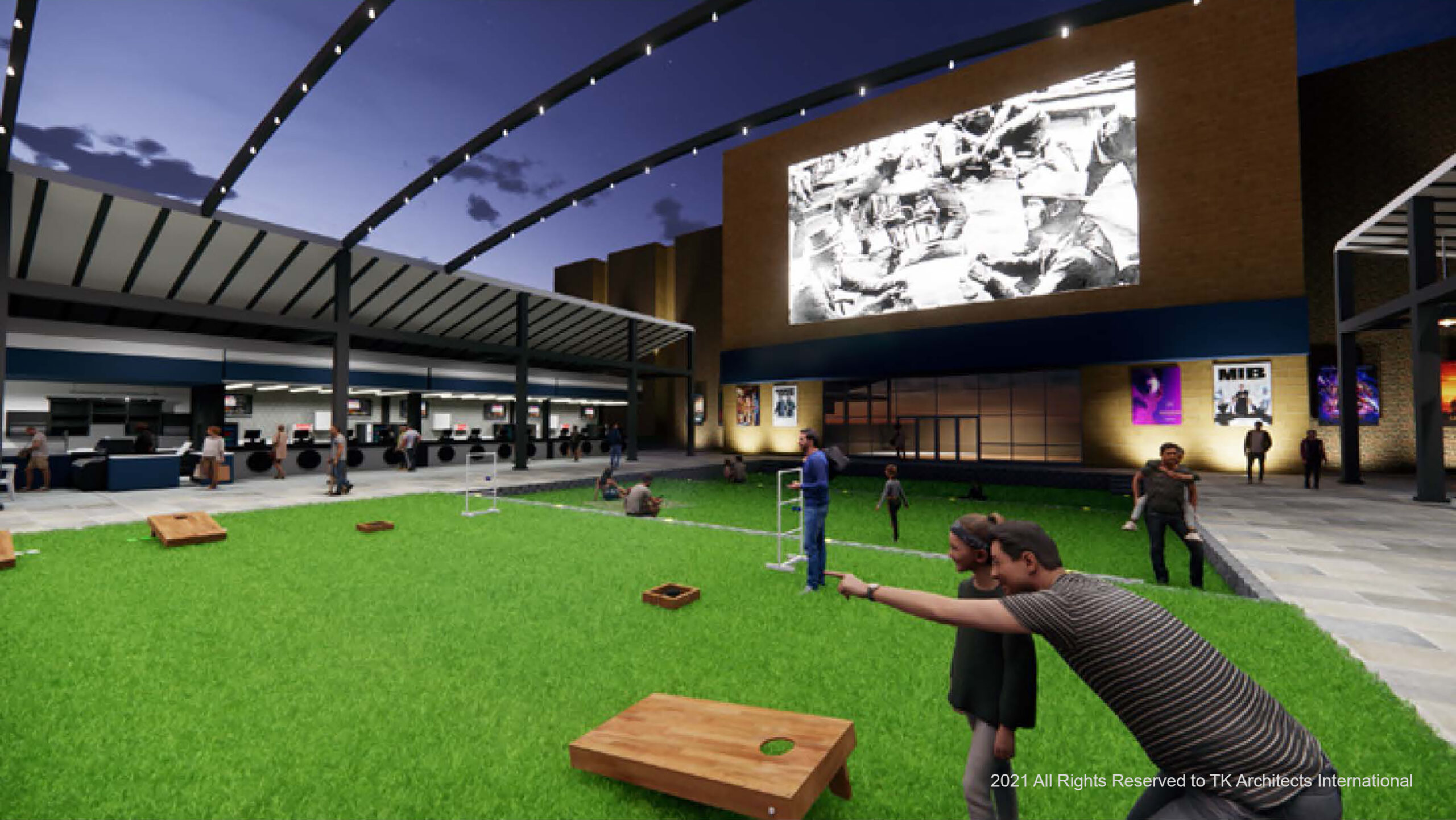
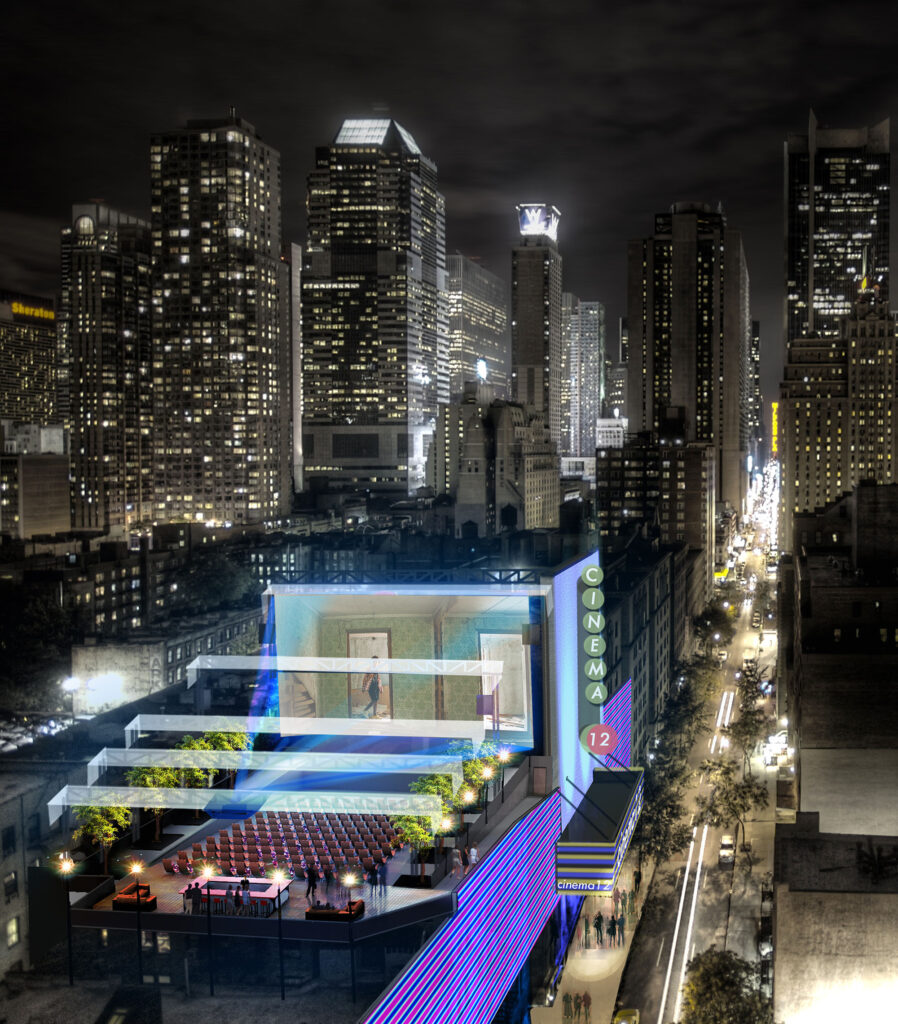
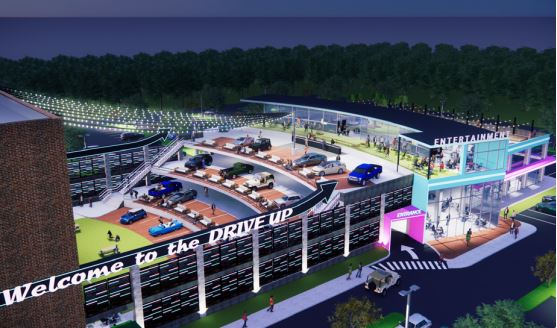
Can the space outside your building also be used to generate revenue?  If you changed your theatre from traditional to recliner seating, you may have more parking spaces than you need. Perhaps part of that space can be converted to revenue generation.  Drive-in theatres were the most common use during the pandemic.  Many people remain more comfortable gathering in outdoor spaces than indoor.  These combine to create a unique opportunity to monetize the parking lot and create a new first impression of your facility for your customers. 
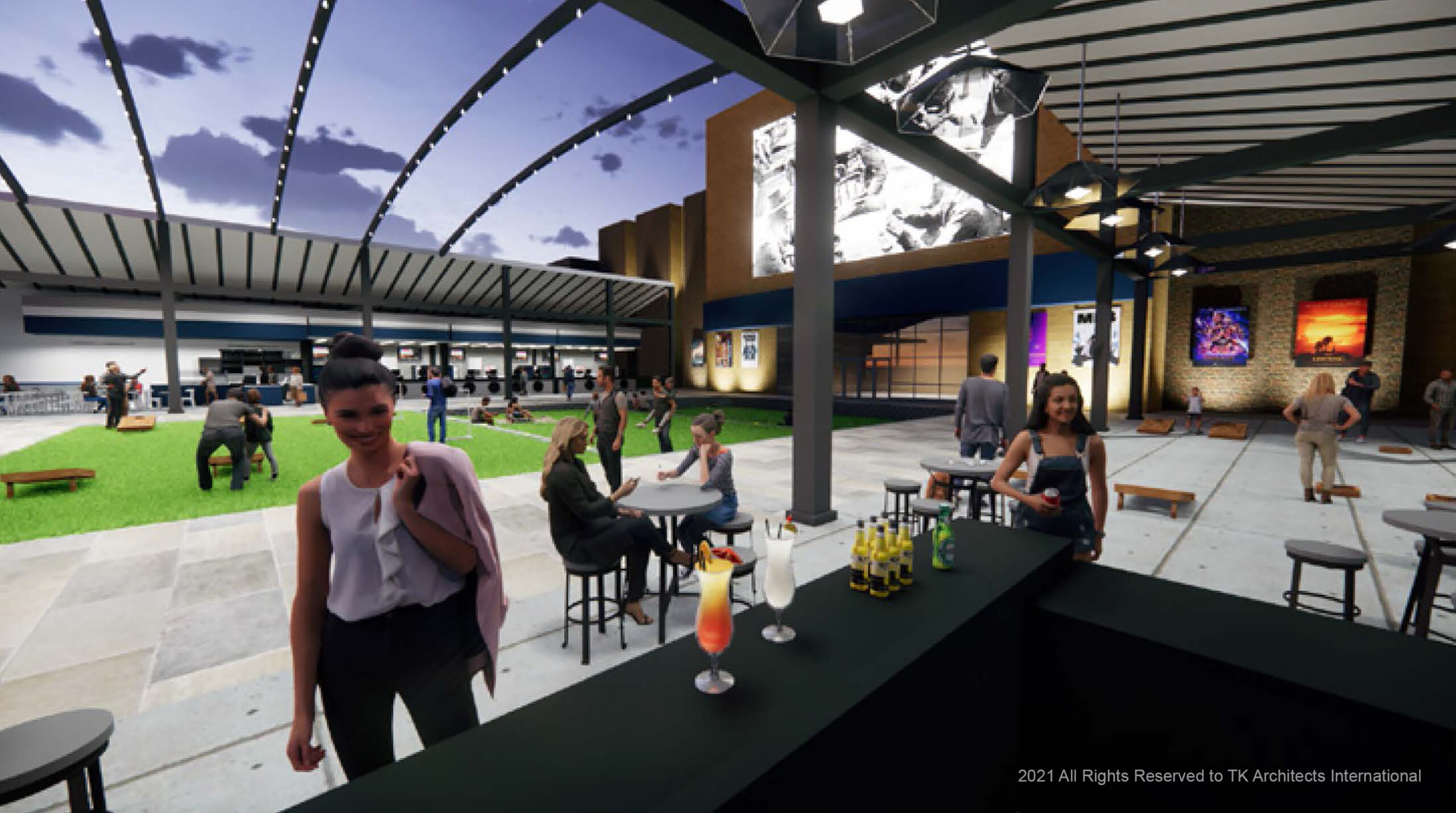
Exhibition will be forever changed by the Pandemic.   It has survived for more than a century because it is resilient and changes with the times.  I believe that we have entered a new period of reinvention, and innovation.  Spurred by entrepreneurial exhibitors like Thomas Van de Weerd, Tim League, Bobbie Bagby-Ford, Crispin Lilly, and others who will be leading the way into the future and the next big things for exhibition. 

Michael Cummings Sr. Principal

TK Architects 40th Aniversary Celebration!

By | No Comments

TK Architects International is celebrating our 40th Anniversary as a firm. We wanted to reflect on our past, celebrate our present, and project our future. We wanted to share it with all the people that have joined us along this journey, including clients, contractors, vendors, friends, and family. As we have grown we have added services, sectors, and diverse international locales. Social media became the platform to bridge distance and a worldwide pandemic. We hope you enjoy the campaign and invite you to share your stories, comments, and memories with us.

Relive the anniversary content with us! Scroll through and see what TKA has been, and IS all about from past to present. Below is all of our anniversary content organized by sector.

Each image below is a playlist. Kick back with some popcorn, and see some History, and meet the people who built TKA. Also, enjoy content from: Cinema, Food & Beverage, and Entertainment!

We hope you will enjoy the content and join us on Facebook and LinkedIn to share some of your favorite moments with us!

Full youtube Playlist HERE: https://www.youtube.com/watch?v=4aZY9hedVAY&list=PLVqK0Gnu_6-gCnl2Zxps8jpDm5y-rXfre

TK ARCHITECTS HISTORY

Sr. Principal MIKE CUMMINGS kicks off our INTERVIEW SERIES and talks about how TK Architects got involved in the cinema industry. Follow along in this TKA HISTORY Playlist and hear from a number of our Principals including Jack Muffoletto, Tamra Knapp, Brad Reynolds, and more! This playlist is packed with TKA origin stories, memorandums, challenges, influences, and acquaintances that help to mold TK Architects into the industry-leading company that it is today.
(15 videos)

CINEMA

See where it all started in the CINEMA for TK Architects! Enjoy our story from the outside to the inside and all around. Grab some popcorn and join us down the promenade to the BIG screen!
(10 Videos)

FOOD & BEVERAGE

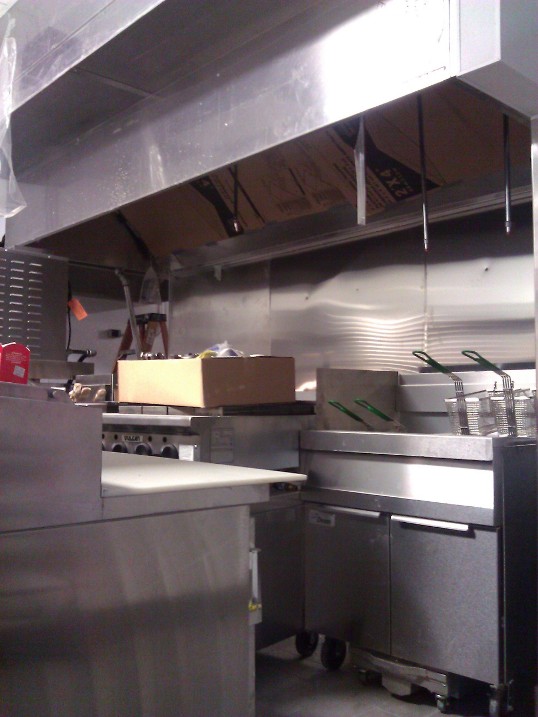
Food and Beverage is not only a stand-alone market sector. It spans across various market sectors as a component of them.  TK has worked on a variety of projects encompassing all ranges of Food and Beverage elements from small kiosks and self-service counters to full-service restaurants.  Having engineering in-house is a particular benefit to the Food and Beverage sector work as F&B equipment is specialized and required focused MEP engineering. When you add our special relationship with equipment vendors, the project work is streamlined for client success.
(5 videos)

ENTERTAINMENT FACILITIES

The evolution of TK Architects from Cinema to holistic Entertainment Facilities seemed to happen naturally due to the synergy that cinema and other entertainment opportunities bring. Entertainment Facilities offer a large revenue stream from Arcades, Bowling, Mini Golf, VR, AR, and Escape rooms.
(5 Videos)

Thank you for following along with our 40th-anniversary content and us over the years. We had a great time creating the content and hearing some of the stories from the past, from the people who built TKA to be what it is today.

Please follow along on social media as we open a new chapter in TK Architects history!